
Thank you to The Wet Spot for their generous donation of thousands of dollars' worth of fish to the auction!

Welcome to the All-Aquarium Catfish Convention Giant Sunday Auction! If you're in town just for the convention, please read our guidelines below as our auction style may differ from what you are used to.
Thank you to The Wet Spot for their generous donation of thousands of dollars' worth of fish to the auction!
The Short Version:
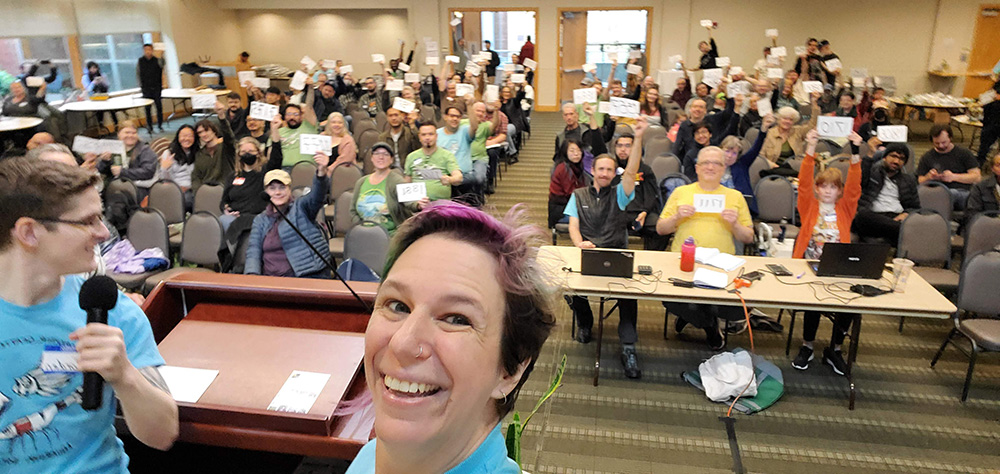
Anyone is welcome to bid!
Participation:All are welcome to attend and bid at the auction. However,
only registered convention attendees may receive a split
by selling
items. Anyone may donate items to the club for the auction (thank you!).
Bidder Registration: To bid in the auction, you will need to register at the Front Desk located near the room entrance. You’ll receive a white card with your bidder number printed or written on it so the auctioneer can see it clearly. Non-club-members may be asked to surrender their drivers license until checkout.
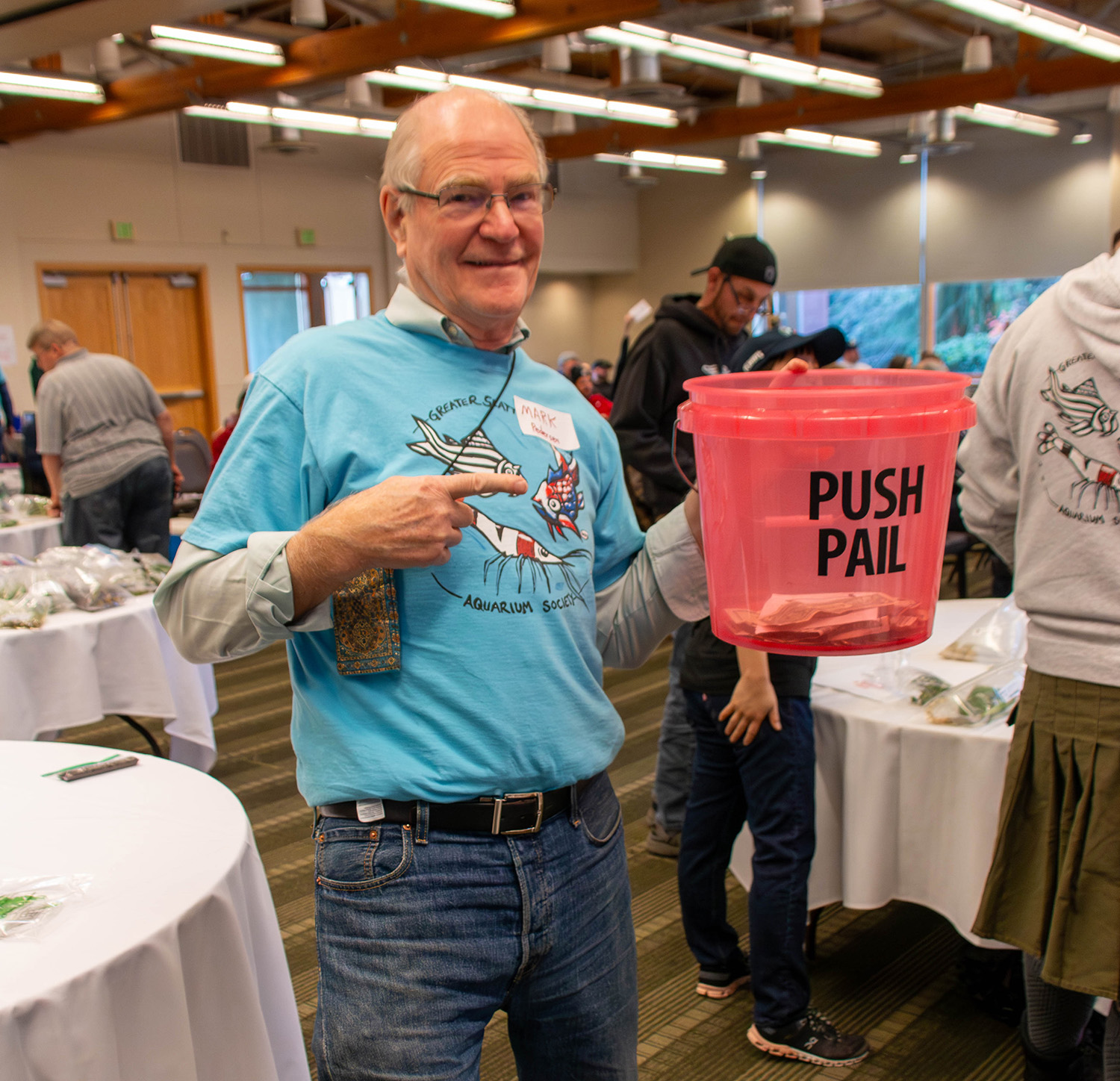
Look for the Push Pail to bring an item up for bid immediately.
Push Pail: Items are normally auctioned in table order. However, if you are interested in a particular item and are leaving early, you can move an item into the queue by paying a nominal fee of $2. Purchase Push stickers at the front desk, or look for the pink Push Pail
.
Check-out and Payment: You may check out at the Front Desk any time during the auction. Payment is in cash or credit card. Once you have checked out, your bidder number is locked, and you may not continue bidding without checking back in first.
If you are a registered convention attendee and want to sell items, we encourage you to pre-register your items online. Pre-registering ensures your descriptions are accurate, and includes the option of printable item tags. You may bypass this step and register at the Front Desk, but your items will be entered by the computer operators as they are sold, so descriptions may be terse and inaccurate. Non GSAS members registered for the convention will be sent a special custom pre-registration link through e-mail shortly before the convention; GSAS members pre-register through the usual manner.
Sellers, please observe the item limit!
Item limits: A maximum number of 15 lots may be sold as Splits
. A seller may sell no more than three lots
of the same
item.. Items are considered the same
if they do not differ substantially from one another (are basically identical).
In the case of live organisms (fish, plant, shrimp, live food, etc.) or previously live (such as wood), items are considered different (not SAME) if they are of different scientific species, or are different Variants of a given species.
For our auction purposes a Variant will be an organism of a given species that differs in color or form enough that it is marketed separately from other Variants of that species.
Examples of Variants include: Gold Platy v. Red Platy, Angelfish v. Veiltail Angelfish, Cryptocoryne wendtii "Green" v. Cryptocoryne wendtii "Bronze", Red Cherry Shrimp v. Blue Velvet Shrimp, Bristlenose Pleco v. Albino Bristlenose Pleco, Zebra Danio v. Longfin Zebra Danio.
You may bring as many items as you wish to donate, but the auctioneer reserves the right to combine similar donated items to speed the auction process along.
No items will be accepted in the Auction after 12:00 noon.
Tanks or other drygoods may not be sold --- only live items. Donated drygoods items are subject to being sold in silent auction or deferred to the club's spring auction, at the discretion of the auction chair.
One item per seller (the "-01" item) may be placed on Table One. This table will be auctioned off before any other tables or Pushes.

Print labels directly from your pre-registration page...
Bag etiquette: Fish of all kinds should be bagged (double-bagged is preferred) and rubber-banded in tall fish bags; if you don’t have any handy, your favorite pet store should sell you some. Jars and other containers are okay for small fish and shrimp. NO ZIPLOC BAGS FOR FISH! Small, lightweight plants can be placed in Ziplocs, but if the plant requires a bit of water to stay alive it needs to be in a tall fish bag.
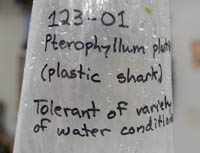
...or just write information clearly with a Sharpie.
All items placed in the auctions that are to be sold as Splits
must display in clearly-displayed block text the following pieces of
information:
This information may either be written on the bag in permanent marker, or you may use a label. There is an option in the pre-registration process to print out your items as nicely-formatted labels. A lot of folks like to print on normal paper, cut up the "labels" and tape them with pieces of packing tape. It is your responsibility to keep the labels clear, dry and legible. If you feel your handwriting is not clear enough for the auctioneer to read, please ask someone else at the meeting to write it for you. We will provide Sharpies for this purpose (pro tip: writing on the bag before you put anything in it gives much better results!)
Large Fish: If you have an unusually large fish that needs to travel by bucket, make sure to bring along a heater and airstone to keep them alive during the meeting!
Seller Split: The seller receives a percentage, or split
of the bid price, with the remainder going to the club
as a donation. The seller receives 70% of the selling price at this auction.
Sellers do not need to stay for the entire auction to receive payment; the GSAS treasurer will mail a check for any unpaid balances after the convention is done. Please make sure your address is correct on the initial invoice that is e-mailed to you.
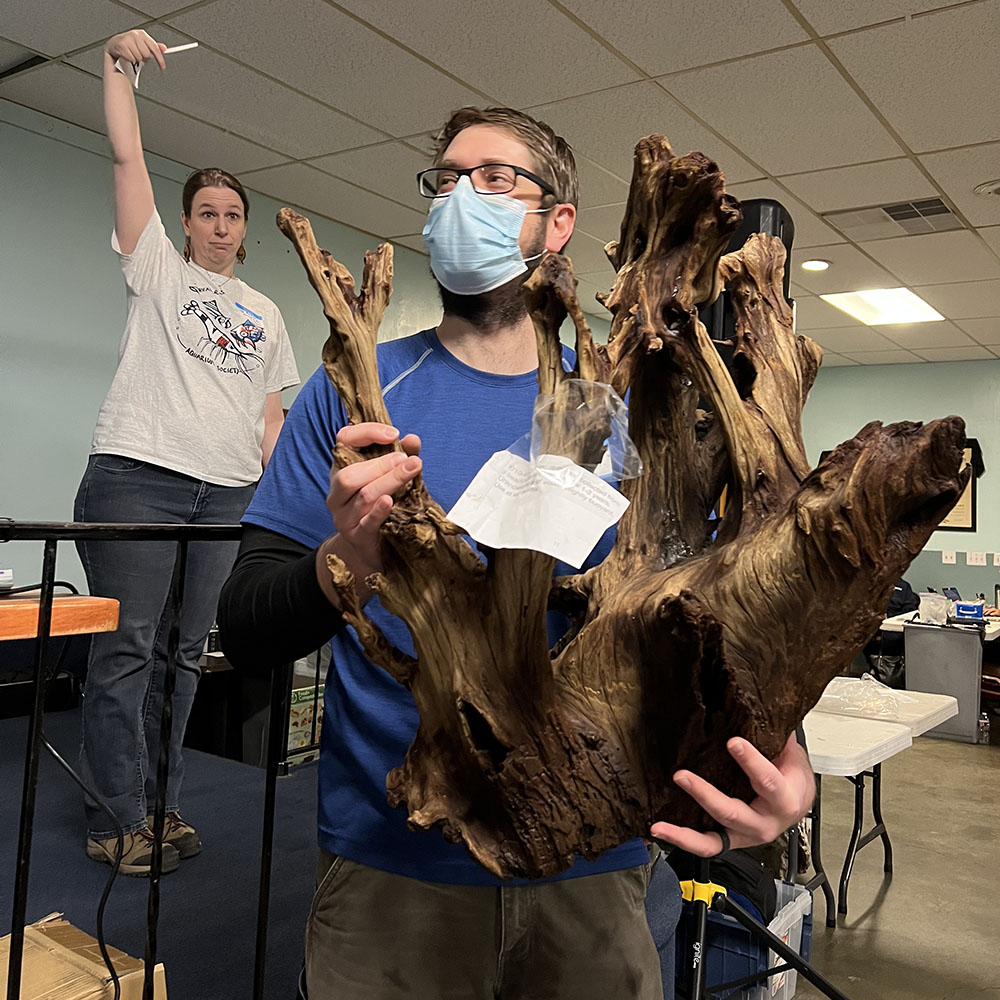
Sellers: Do not bring drygoods to sell at this auction! But we will have some drygoods donations available from our sponsors.
Minimums: If a seller has a high value item that they do not wish to sell below a minimum price, that information must be clearly indicated and marked on the item or label. The auctioneer will start the bidding at that price. If bidding is accidentally started below the minimum price specified, it is the responsibility of the seller to bring the error to the attention of the auctioneer prior to the item being sold.
Donations: If the item is a donation, your seller number-item number is optional. There is space in the pre-registration form to include donations, and their selling price will be included in your receipt for your information. By the same token, if you forget to put your seller number on the bag, it becomes a donation! The auctioneer reserves the right to reject or sell as a donation anything that can’t be clearly read.
Item Placement and Running: Items should be always placed as directed by the table manager. Each auction has different rules, so please check at the event. Late items must not be placed on the table of items currently being sold, nor may items be moved between tables once placed. Runners (including sellers) are not allowed to pull items from arbitrary tables -- runners must pick only from the table designated by the table manager. The table manager may further designate the specific item for each runner.
Prohibited Items: If something is illegal or invasive, please don’t bring it. If you’re unsure, ask the auction chair for help, or check the following links: